at the hong kong construction site, computer room communication and network bandwidth configuration directly affect construction management, video surveillance, internet of things and data transmission efficiency. this article focuses on "recommendations for communication and network bandwidth configuration of hong kong construction site computer rooms to improve project efficiency" and provides practical points that are in line with local regulations and site characteristics, allowing the project team to quickly formulate reliable plans and optimize the construction rhythm.
worksite network challenges and goals
common challenges at hong kong construction sites include limited space, complex environments, frequent equipment movement, and diverse telecommunications access. the configuration goal should be to ensure low latency, high availability, scalability, and concurrent access to video surveillance, bim data, remote command, and iot devices, ensuring that construction site communications are stable and easy to maintain.
bandwidth needs assessment methodology
the estimated bandwidth needs to be estimated based on the device list and business type: high-definition video streaming, real-time data upload, remote office and iot heartbeat data. reserve redundancy based on concurrency peaks, consider temporary construction peaks and phased testing needs, and make capacity planning based on the access capabilities of hong kong operators.
network topology and computer room layout suggestions
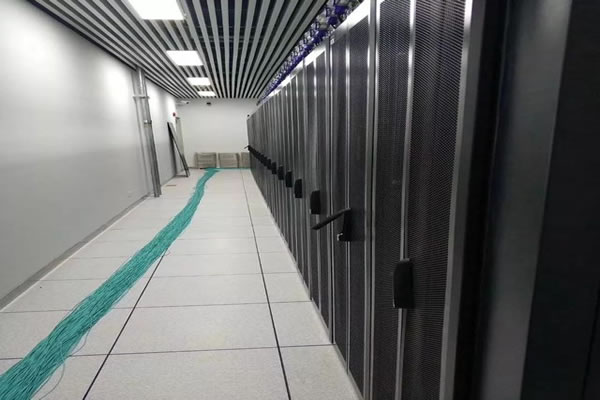
it is recommended to adopt a layered topology: the access layer covers on-site terminals and cameras, the aggregation layer centrally processes traffic, and the core layer is responsible for outbound and redundant routing. the layout of the computer room should be close to the main control area, and attention should be paid to moisture, dust, and heat dissipation. the wiring should follow clear markings and modularization to facilitate later expansion and relocation.
communication methods and redundant design
in hong kong, priority should be given to wired fiber optic access to ensure stability, combined with 4g/5g or dedicated lines as backup. the redundant design includes multi-path routing, dual power supplies and uninterruptible power supplies (ups). key links adopt an automatic switching mechanism to reduce fault recovery time and improve project continuity.
device interface and standardized configuration
equipment in the computer room should follow standard interfaces and protocols (such as sfp, poe, vlan, snmp), and unified switch and routing strategies facilitate management. cameras and sensors are powered by poe and managed centrally. equipment selection focuses on industrial-grade protection and modular design that is easy to maintain on site.
security and monitoring strategy
network security needs to cover boundary protection, access control and log auditing. use firewall partitions to manage construction systems and office networks, deploy centralized monitoring platforms and alarm linkages to ensure encrypted transmission of video and control data, and formulate clear permissions and emergency response procedures.
operation, maintenance and upgrade management
it is recommended to establish a standardized operation and maintenance manual and on-site spare parts list, and implement regular inspections and bandwidth performance monitoring. use visual monitoring and capacity prediction tools to plan expansion windows in advance, and maintain communication channels with hong kong operators and project contractors to shorten fault resolution time.
summary and suggestions
based on the above points, the key to improving engineering efficiency lies in accurate bandwidth assessment, hierarchical topology design, reliable redundancy and strict security management. hong kong construction sites should develop modular and scalable computer room communication and network bandwidth configuration plans based on actual site conditions and regulatory requirements, and ensure long-term stability through institutionalized operation and maintenance.

- Latest articles
- The Technical Team’s Experience Discusses The Three Core Indicators For Choosing The Best Vps In Korea
- Performance Tuning And Monitoring Methods Of Vietnam Cn2 Network In High Concurrency Scenarios
- Buy Cloud Servers In Thailand At Low Prices, Compare Manufacturer Discounts And Long-term Operation And Maintenance Costs
- Enterprise Deploys Japanese Native Dynamic IP Address Load Balancing And Failover Solution
- Use Vietnam's Native IP Cloud Server To Build A Private VPN And Corporate Intranet Acceleration Solution
- How To Choose The Appropriate HKEX Computer Room Server Configuration For Financial Business
- Common Misunderstandings Avoidance Guide On The Configuration And Maintenance Of Multiple IPs For US High-Defense Servers
- Beginner's Guide: How To Choose A Cloud Server In Hong Kong? Detailed Explanation Of Bandwidth Selection And Billing Methods
- Huawei Cloud Singapore Server Instance Selection Suggested Specification Comparison Table For Different Business Scenarios
- Comparative Study Of Differences In Construction Standards And Operation Models Between Indian And German Computer Rooms
- Popular tags
-

The Latest Promotions And Cost-effective Buying Strategies For Hong Kong Site Group Server Discounts
this article focuses on hong kong site group server discounts and promotions, analyzes common discount types, price/performance evaluation indicators and snap-up strategies to help webmasters make reasonable choices between performance, compliance and cost. -
How To Choose A Cost-effective Hong Kong Computer Room Service Provider
Learn how to choose a cost-effective Hong Kong computer room service provider to ensure your business operates in a stable and secure environment. -

How To Assess The Long-term Service Stability Of Hong Kong Aide's Data Center
This article introduces how to assess the long-term service stability of Hong Kong Aide's data center, covering key dimensions such as SLA, power cooling redundancy, operation and maintenance response, monitoring and alerts, physical safety and compliance, and customer reputation, providing actionable evaluation recommendations.